

Stop me if you’ve heard this one before…
You send your client a product idea. It’s solid. Good price, practical, fits their brand. But instead of excitement, you get silence. Or worse: “Do you have anything cheaper?”
Frustrating, right? You know the product delivers value. But your client isn’t seeing it.
Here’s the problem. When you show a plain product image, your client has to do the heavy lifting. They have to imagine how it’s used, where it fits, and why it matters. Most won’t.
Top distributors solve this differently. They don’t just show products. They show them in action. They help clients see themselves using them.
In this article, you’ll learn why lifestyle images work, how they shift client thinking, and how to use them to close more deals.
Why Product Images Alone Fall Short
A standard product image doesn’t sell. It just shows.
On a white background, clients don’t see impact. They see an object with a price tag. So they compare. Prices, suppliers, alternatives. Not because they want cheaper options, but because they don’t yet see value.
When ideas feel generic, they feel replaceable.
A notebook on a white background is just a notebook. Show it in use during a meeting, and suddenly it feels relevant.
Your clients don’t struggle to understand what the product is. They struggle to see what it does for them.
What Lifestyle Images Actually Do
Lifestyle images bridge the gap between seeing and understanding.
They remove the need for imagination by showing real context. On a desk, at an event, in someone’s hand. That changes the reaction.
Instead of “What is this?”
They think, “That would work for us.”
That shift is everything.
A tote bag alone is just a bag. At a busy trade show, it becomes practical and valuable. You are no longer asking for a leap. You are showing the outcome.
The Key Benefits of Using Lifestyle Images
Now that you understand what lifestyle images do, let’s make this practical.
Here’s how they directly help you sell more and sell better.
1. Faster Decision-Making
When a client immediately understands how a product will be used, you remove friction.
There’s no back-and-forth trying to explain the idea. No long email threads clarifying the purpose. They see it, they get it, and they can make a decision.
A lifestyle image lets them process the idea in seconds.
And when decisions are easier, they happen faster.
2. Higher Perceived Value (and Less Price Sensitivity)
If a product looks generic, it feels replaceable. And if it feels replaceable, your client will shop on price.
Lifestyle images change that.
When a client sees a product in use, tied to a real scenario, it feels more considered. More intentional. More valuable.
You’re no longer just showing a $5 water bottle. You’re showing a welcome pack essential. A gym companion. A daily-use item that keeps their brand visible.
That context increases perceived value. And when value goes up, price becomes less of the main focus.
3. Bigger, More Confident Orders
When clients can clearly see how a product fits into their plan, they’re more likely to commit.
Uncertainty leads to smaller, safer orders.
Clarity leads to bigger, more confident ones.
If a client can picture their entire team using a product, or every attendee receiving it at an event, ordering a higher quantity feels like the obvious move.
4. Stronger Client Engagement
Lifestyle images make your presentations more engaging and visually appealing.
A plain product grid feels transactional.
A lifestyle-driven presentation feels well thought out and relevant.
This keeps your client’s attention for longer and positions you differently. You’re not just sending options. You’re showing ideas.
And that shift matters.
Because clients remember the distributor who made things easy to understand and easy to visualize.
5. You Position Yourself as a Strategic Partner, Not Just a Supplier
This is the bigger picture.
When you use lifestyle images, you’re not just selling products. You’re showing outcomes. You’re demonstrating that you understand how these products are actually used in the real world.
That builds trust.
Instead of being seen as someone who sources items, you’re seen as someone who helps clients make better decisions.
And that’s what leads to repeat business and stronger relationships.
A Real-World Example: Same Product, Different Outcome
Let’s make this tangible.
Imagine you’re pitching a branded water bottle to a client for an employee wellness initiative.
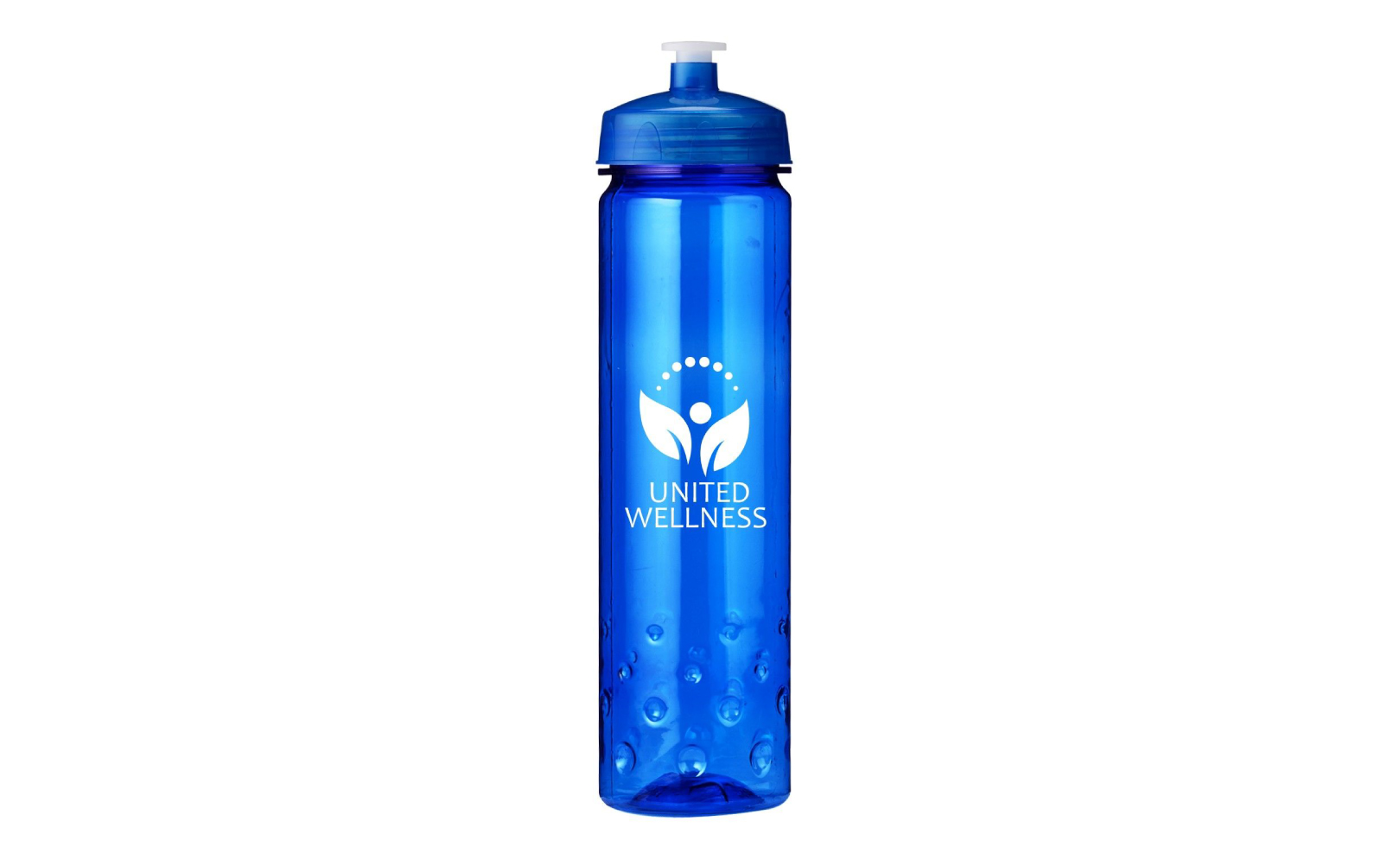
Option 1: The Standard Approach
You send a clean product image on a white background. Maybe you include a logo mock-up and the price.
Your client sees a bottle.
They think, “Okay, that’s nice.”
Then they ask, “Is there a cheaper option?”
Now you’re in a pricing conversation.
Option 2: The Lifestyle Approach
This time, you show the same bottle, but in context. It’s sitting on a desk next to a laptop. Someone is using it at the gym. Another image shows it in a welcome pack for new employees.

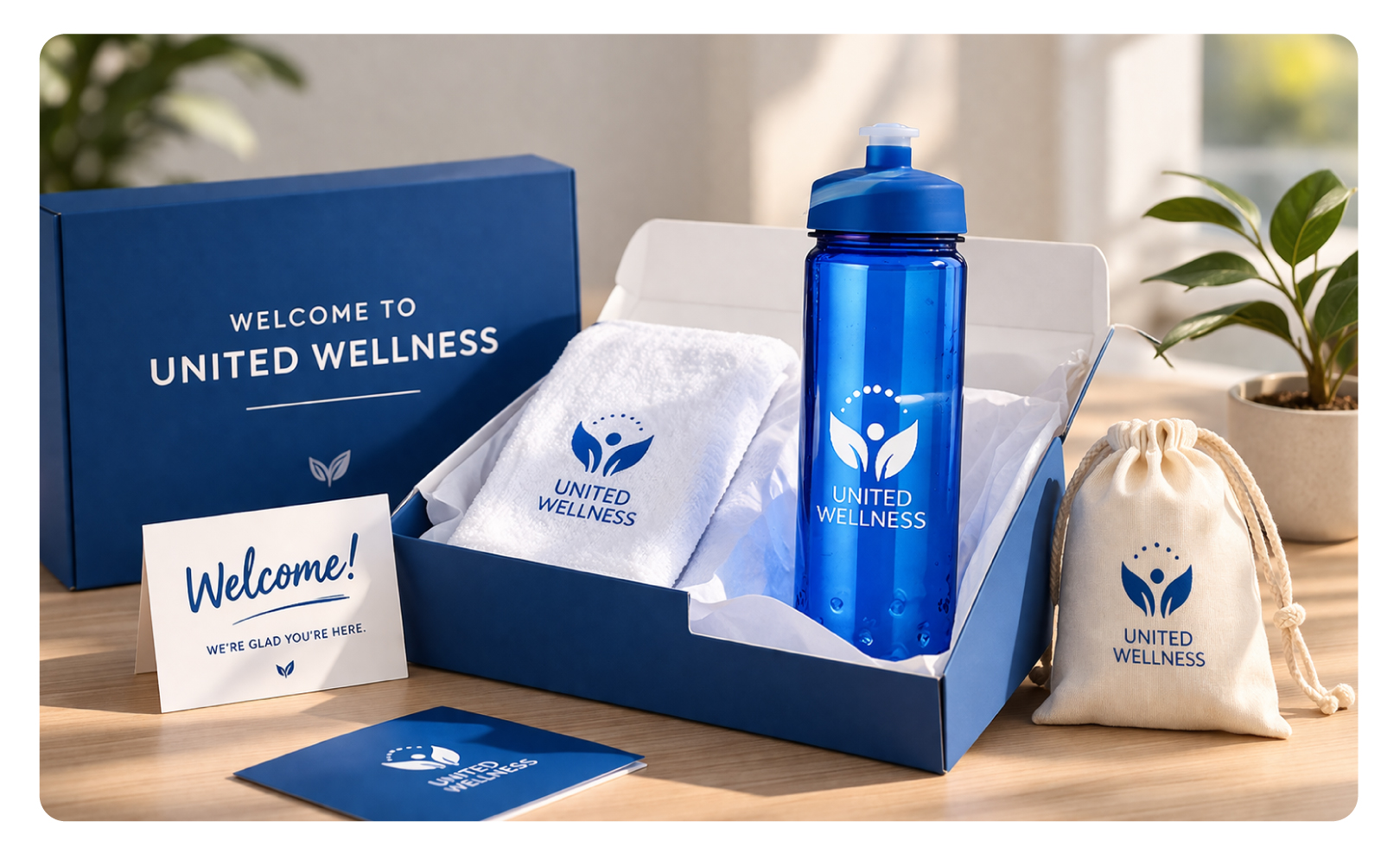

Now your client sees something different.
They’re not just seeing a bottle. They’re seeing:
- A useful item their team will actually use daily
- A way to support a wellness initiative
- A product that keeps their brand visible throughout the day
The conversation changes.
Instead of “Is there something cheaper?” it becomes:
“This would be great for our onboarding packs.”
“How quickly can we get these?”
“Can we do one for each department?”
What Changed?
Not the product.
Not the price.
Not even the branding.
What changed was the context.
You showed them how the product fits into their world. You removed the guesswork. You made the idea feel real.
And when an idea feels real, it’s easier to say yes to.
This is the difference lifestyle images make. They don’t just make things look better. They make your ideas easier to buy into.
How to Start Using Lifestyle Images (Without Overcomplicating It)
At this point, you might be thinking, “This makes sense… but how do I actually do this without adding more work to my day?”
Good news. You don’t need to overhaul your entire process.
You just need to make a few simple shifts.
Use Them in Your Existing Process
This doesn’t need to be complicated. In fact, it’s easier than you might think.
With tools like SAGE Workplace, you can now use AI to place your client’s branded products into real-life settings in just a few clicks.
Simply go to the items in your presentation, tag the products you want lifestyle images for, and click Create Lifestyle Images.
That’s it.
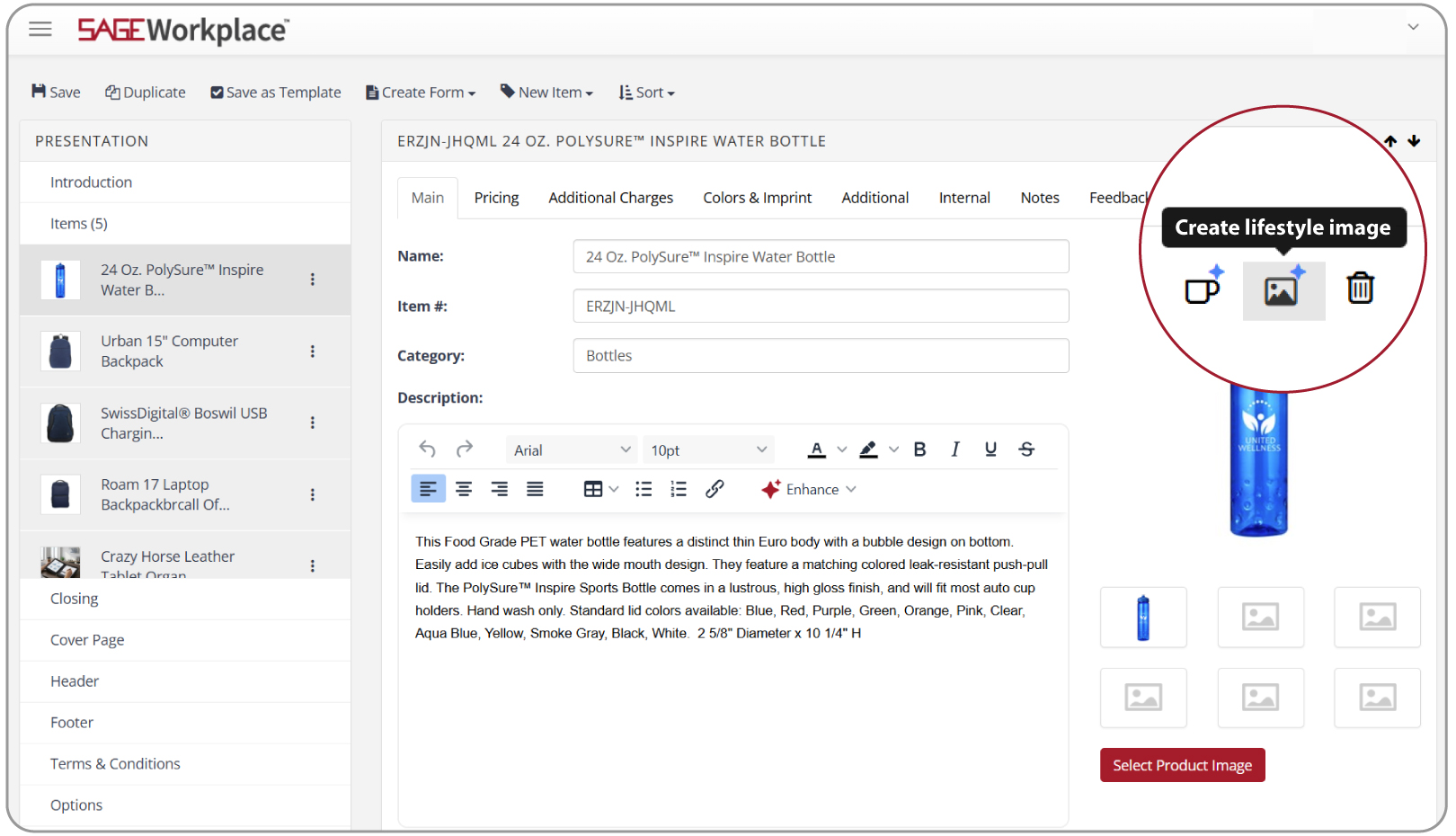
Instead of sending a plain product image, you’re now showing your client exactly how their merch could look and feel in the real world. No extra design work. No long process.
It’s a small step that makes a big difference in how your ideas come across.
Pair Lifestyle Images With Your Mock-Ups
This is where things really click.
A mock-up shows your client’s brand on the product.
A lifestyle image shows how the product is used.
When you combine the two, you give your client the full picture.
They can see their logo on the item and understand where it fits in real life. That combination is far more powerful than either one on its own.
You’re Not Just Showing Products, You’re Shaping Decisions
If clients cannot picture how a product fits into their world, they will not fully buy in. The conversation defaults to price.
Lifestyle images make ideas clear, tangible, and easy to understand. That leads to faster, better, and bigger decisions.
So next time you send a proposal, ask:
Am I just showing the product, or showing how it is used?
That small shift can change how you sell.
0 Comments