


Does your About Us page just tell people who you are, or does it give them a reason to choose your business?
Many business owners treat the About Us page as just another item on their to-do list. They write a brief summary about how the company began, mention their products or services, and move on. But most visitors aren’t interested in your company’s history. They really want to know if they can trust you.
This is why the About Us page matters. When it’s done right, it helps people connect with your business, understand what sets you apart, and feel ready to move forward. If it falls short, you lose the chance to turn visitors into customers.
This blog will cover six questions every strong About Us page should answer, common mistakes to watch out for, and simple ways to make your story build trust instead of just filling space.
Why Your About Us Page Matters More Than You Think
Your About Us page does more than share your story. Its main goal is to build trust.
Think about how you research a business before making a purchase. If you’re unfamiliar with the company, you likely go beyond the homepage. You might read reviews, look at their social media, or visit the About Us page to learn more. Your customers do the same.
This is why the About Us page is often one of the most visited sections of a website. People want to know there’s a real business behind the products or services they’re considering.
Many companies use their About Us page as a timeline. They focus on dates and milestones but don’t explain why these details matter to the customer.
Instead, think of your About Us page as a way to connect with your audience. Your story should answer the questions visitors already have:
- Who are you?
- Why should I trust you?
- What makes you different?
- Can you solve my problem?
When your page answers these questions clearly, it becomes more than just a company profile. It turns into a powerful tool for building trust and supporting sales.
A simple way to cover everything is to use six key questions as your guide. Together, these questions tell your story and give visitors the confidence to choose your business.
The Six Questions Every About Us Page Should Answer
If you’re staring at a blank page and aren’t sure where to begin, keep it simple. Every great About Us page answers six basic questions:
- Who are you?
- What do you do?
- Where do you work or who do you serve?
- When did you start?
- Why does your business exist?
- How do you help your customers?
You don’t need a separate section for each question, but together they should give a clear picture of your business. The goal isn’t to share every detail, but to give visitors enough information to trust you and feel ready to move forward.
Let’s look at each question in more detail.
1. Who Are You?
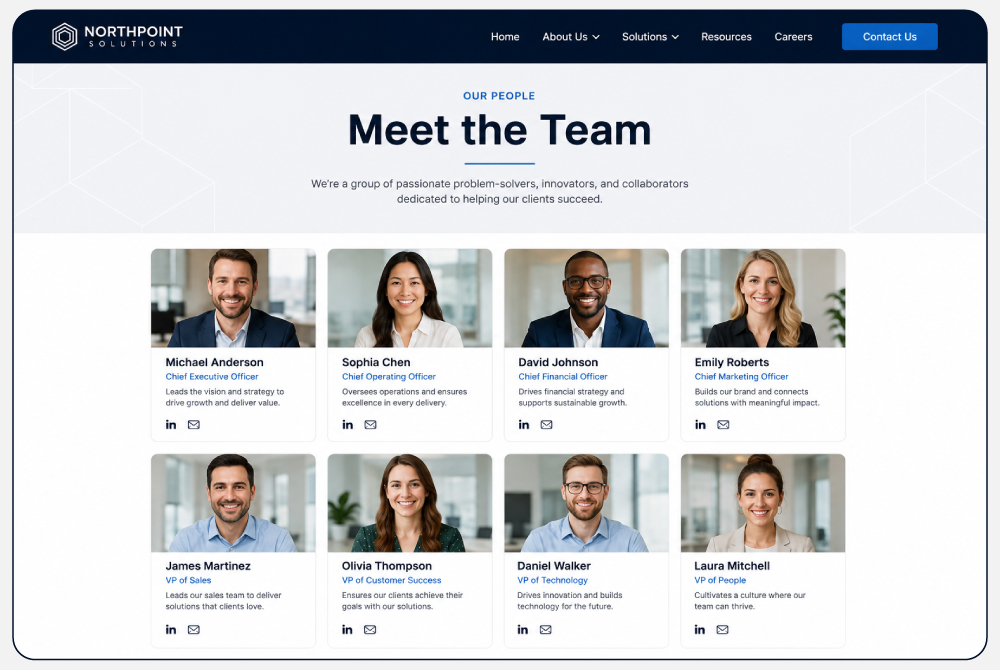
People prefer to buy from people. Show the faces behind your business with a team photo, behind-the-scenes images, or friendly introductions. If you run a small business, share your own story and what inspired you to start. Personal touches help visitors connect with your brand and build trust.
2. What Do You Do?
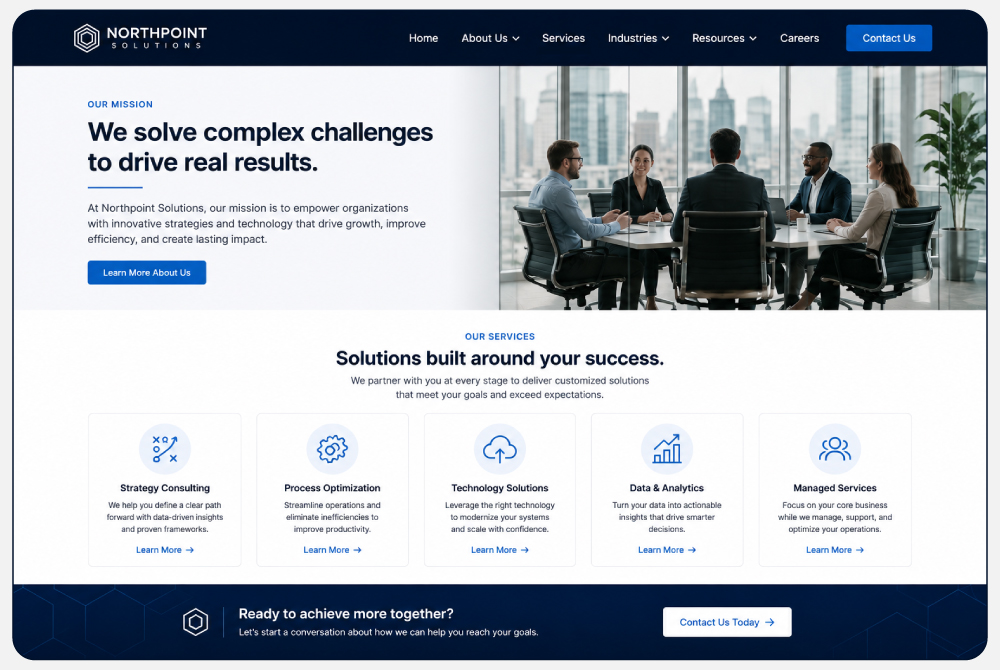
Explain what your business does in clear, simple language. Skip the buzzwords and highlight what makes you unique, whether it’s your expertise, process, or customer service. This is also a good place to share a straightforward mission statement that shows why your business exists and how it helps customers.
For example, compare these two mission statements:
Less effective:
“To deliver innovative, customer-centric solutions while driving operational excellence.”
More effective:
“To make ordering branded merchandise simple, stress-free and reliable, so your team can focus on running successful events instead of chasing suppliers.”
The second example tells visitors exactly what the business aims to do and, more importantly, how it helps them.
As you write this section, ask yourself: If someone visited this page without seeing the rest of your website, would they understand what your business does and why it matters to them?
3. Where Do You Work or Who Do You Serve?
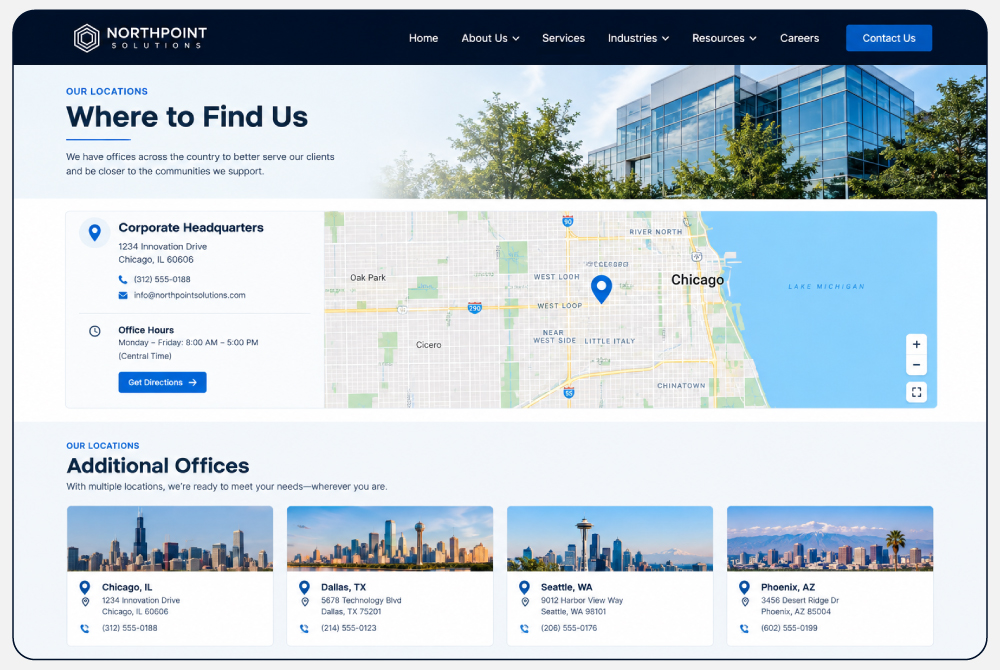
Let visitors know where you operate and, most importantly, who you help. Whether you serve local customers, businesses across the country, or a specific industry, be specific so the right people know you’re a good fit. If customers visit your business, include your location and contact details.
For example, instead of saying:
“We serve customers nationwide.”
You could say:
“We help schools, charities, and growing businesses across the US source branded merchandise that’s delivered on time and within budget.”
The second example quickly tells visitors who you help and how you support them.
If your business has multiple offices, remote teams, or serves different regions, mention it. This reassures customers that you can support them wherever they are.
4. When Did You Start? & 5. Why Does Your Business Exist?
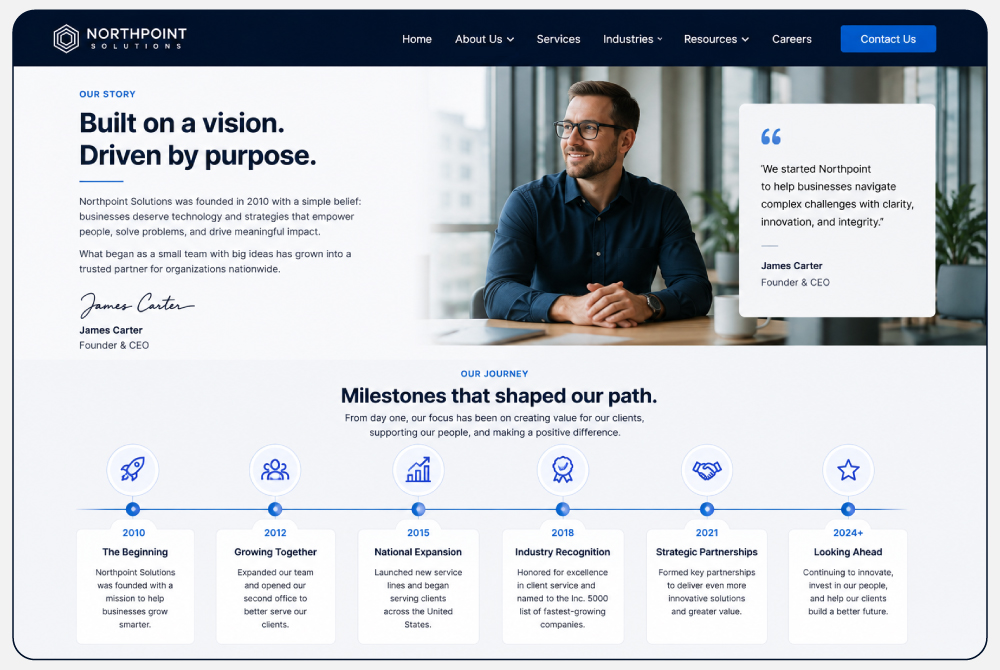
Share the story behind your business instead of just listing dates and milestones. Explain what inspired you to start and how that mission continues today. If you mention awards or years in business, show how they benefit your customers.
For example:
“After struggling to find reliable promotional product suppliers for our own events, we realized other businesses were facing the same challenge. We launched our company with one goal: to make ordering branded merchandise simple, transparent, and dependable. Today, we work with organizations across the US, but that original mission hasn’t changed.”
This way, you tell a story and show the value you offer.
If your business has reached big milestones, like 25 years in business, new markets, or industry awards, mention them where they fit. Make sure to explain how these achievements help your customers. Experience and recognition build trust when you connect them to the people you serve.
6. How Do You Help Your Customers?
Support your story with proof. Share testimonials, case studies, awards, certifications, or key statistics that show your experience and reliability.
For example, instead of writing:
“We’re committed to providing excellent customer service.”
You could support that claim with something tangible:
“We’ve helped more than 2,000 businesses source branded merchandise, with hundreds of five-star customer reviews praising our communication, reliability, and attention to detail.”
End with a clear call to action, like contacting your team, requesting a quote, or exploring your products or services.
A great About Us page does more than tell your story. It gives visitors the confidence to become customers.
Common About Us Page Mistakes to Avoid
Even if your About Us page has all the right information, common mistakes can reduce its impact. Before you publish, check that you’re not making these errors.
Talking Too Much About Yourself
It may seem strange, but your About Us page isn’t really about you. It’s about helping customers see why they should trust you.
As you share your story, keep the focus on the reader. Show how your experience, values, and approach benefit your customers.
Using Generic Buzzwords
Words like innovative, customer-focused, and industry-leading don’t mean much on their own. Almost every business uses them.
Instead of just making claims, support them with real examples. Show visitors what makes your business different rather than just telling them.
Including Too Much History
Your company history is important, but most visitors don’t need to know every milestone since you started.
Focus on the moments that shaped your business, explain why they matter, and keep your story moving forward.
Forgetting the Human Element
People connect with people. If your About Us page is only text, you’re missing a chance to build trust.
Add photos of your team, your workplace, or behind-the-scenes moments to give visitors a real feel for your business.
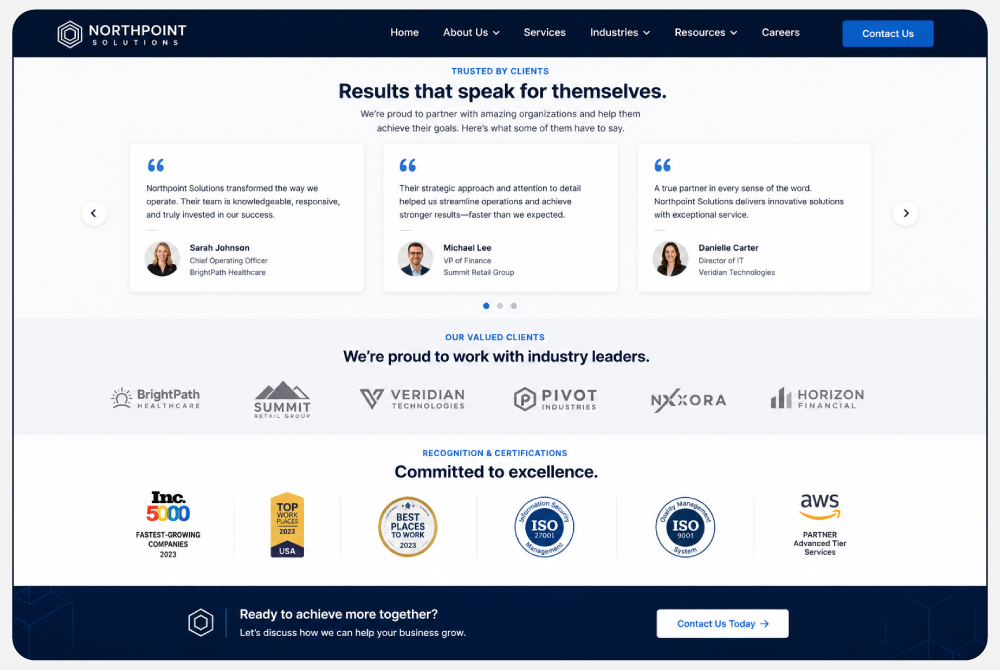
Leaving Out Social Proof
You’ve explained why visitors should trust you. Now show them.
Testimonials, case studies, awards, and client logos all help build your credibility and reassure potential customers they’re making the right choice.
Not Including a Clear Next Step
Don’t leave interested visitors wondering what to do next.
Whether it’s requesting a quote, booking a consultation, or getting in touch, finish your About Us page with a clear call to action that encourages readers to take the next step with your business.
If your About Us page answers the six key questions, avoids these common mistakes, and gives visitors a clear next step, it will do more than just introduce your business. It will help turn visitors into customers.
Your About Us Page Is More Than an Introduction
Your About Us page is more than just another part of your website. For many visitors, it’s the page that helps them decide whether they trust your business enough to reach out.
By answering six simple questions—who, what, where, when, why, and how—you can create a page that does more than tell your story. It shows potential customers who you are, what you stand for, and most importantly, why they should choose you over the competition.
Remember, people don’t visit your About Us page just to read your company history. They visit because they’re deciding whether to do business with you. Give them the confidence to say yes.
0 Comments